Wall Leak Detection & Repair in Commerce City, CO
Licensed Colorado leak detection. 24/7 emergency service across Commerce City and Adams County.
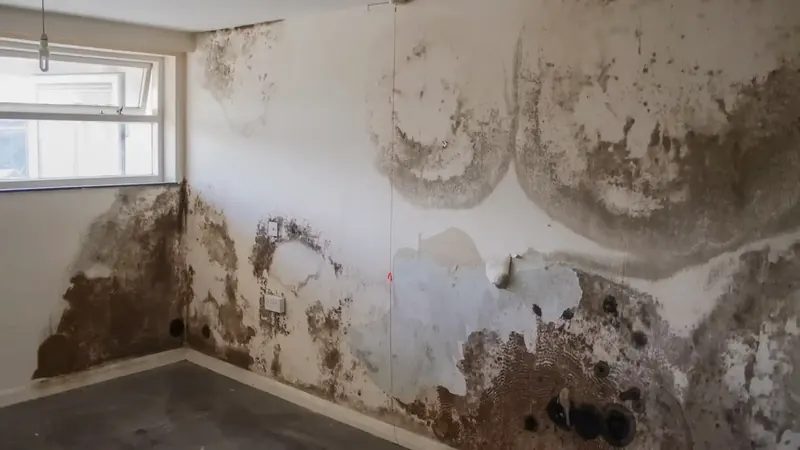
Call (303) 552-3896You noticed the drywall near the bathroom was softer than expected. Then a small discoloration appeared at the baseboard. You painted over it twice. It came back both times. By the time the stain had grown to the size of a dinner plate, a supply branch behind that wall had been weeping at a compression fitting for roughly eight weeks. In that time, the stud nearest the pipe absorbed moisture to 23 percent, above the threshold where mold begins in framing. The fitting repair took 40 minutes. The drywall remediation took three days.
Finding the wall leak before the symptom surfaces is the value of thermal imaging. Detecting it at the first visible sign, before the wet zone spreads, is the second-best outcome. Either way, the approach is the same: thermal camera scan, moisture meter confirmation, acoustic amplification if the leak is active and pressurized, then a single targeted access cut at the confirmed location rather than exploratory demolition across a wall section.
How Thermal Imaging Finds Wall Leaks
A thermal imaging camera detects radiant heat differences at wall and ceiling surfaces. A hot-water supply line leaking behind drywall warms the panel surface above the leak point. A cold-water line leaking in a heated wall produces a slightly cooler zone through evaporative cooling. Commerce City’s cold winters are an advantage: the exterior wall temperature contrast makes moisture anomalies in north-facing walls significantly more visible in January than in July.
Capacitance moisture meters read moisture content through the drywall surface without penetrating it. Systematic readings across the suspect area map the wet zone extent and identify the highest-moisture point, typically within 12 inches of the actual failure. That narrows the access cut from the full thermal zone to a specific 6-by-8-inch section of wall surface. For active pressurized leaks, electronic acoustic amplification through the wall surface picks up the sound of water escaping under pressure, giving two independent measurements pointing to the same location before any cut is made.
Wall Construction Across Commerce City Housing Eras
Original Commerce City, Adams City, and Irondale homes from the 1920s–1950s used plaster-over-lath construction. Plaster is more moisture-resistant than modern drywall and takes longer to stain, which means wall leaks in historic-core homes often accumulate more framing damage before surfacing visually. Access through original plaster requires more care than cutting standard drywall, and restoration means matching a finish that may not have been touched in 70 years. Minimum-necessary access cuts matter most in these homes.
Mid-century 1960s–80s tract homes used standard drywall with copper supply branches. The pre-2021 SACWSD water hardness at 21 grains per gallon left corrosion deposits in these copper branches, and those deposits drive wall leaks clustering now in the scattered tract areas of Commerce City. Reunion, Belle Creek, and Eagle Creek townhomes with shared walls present a different challenge: a leak in one unit’s supply system can migrate through the shared wall assembly and appear in an adjacent unit, changing the repair responsibility and insurance claim routing.
Wall Leak Repair
Once the leak location is confirmed and the access cut made, the pipe repair itself is usually straightforward. A compression coupling or short section of replacement copper handles most supply branch failures in historic-core homes. PEX fitting replacements at manifold connections in master-planned community homes require only the fitting and appropriate tooling. The repair scope is explained before any work starts. After pipe repair, the cavity dries before the access cut is closed. Commerce City’s dry Front Range climate is an advantage: framing in an open cavity with fan circulation typically dries to below 16 percent moisture content within 48 hours. Call (303) 552-3896 to schedule thermal imaging before any wall demolition is started.
Call 24/7: (303) 552-3896Frequently Asked Questions
How do I tell if a wall stain is from a plumbing leak?
Active plumbing leaks produce stains that grow over time, feel damp or cool to the touch, and return after painting over. A moisture meter reading above 20 percent on standard drywall at the stain location confirms active moisture in the wall assembly. Stains that correlate with rain events and appear only at the top of the wall may indicate a roof or flashing issue rather than a plumbing leak.
Do you have to cut walls open to find leaks?
Detection comes first. Thermal imaging, moisture metering, and acoustic amplification locate the failure within a few inches from the wall surface without any penetration. When a cut is needed for repair, it is sized to the confirmed location, typically 6 by 8 inches, rather than a section-wide exploratory opening.
What pipe materials should I expect in older Adams City home walls?
Adams City homes built through the 1950s typically have galvanized steel supply and cast-iron drain stacks. Galvanized supply at 70 to 90 years old is past service life in most cases. A wall leak in these homes usually indicates a broader pipe condition issue, since the failure that surfaced is rarely the only corroded section at that age.
Related Services
- Ceiling Leak Detection & Repair
- Pinhole Leak Detection & Repair
- Thermal Imaging Leak Detection
- Non-Invasive Leak Detection
- Copper Pipe Leak Detection & Repair
- Whole-House Repipe Service
Locations We Serve
Leak in Commerce City? Call Now.
24/7 Adams County response. Licensed in Colorado. No forms.
(303) 552-3896