Why Your Commerce City Toilet Keeps Running — Flapper, Fill Valve, or Something Worse?
A running toilet is the most common hidden water waster in Commerce City homes, and it can cost $20 to $30 a month on your SACWSD bill. Here is how to identify which part is failing and why Commerce City water makes it worse.
Leak Emergency? Call (303) 552-3896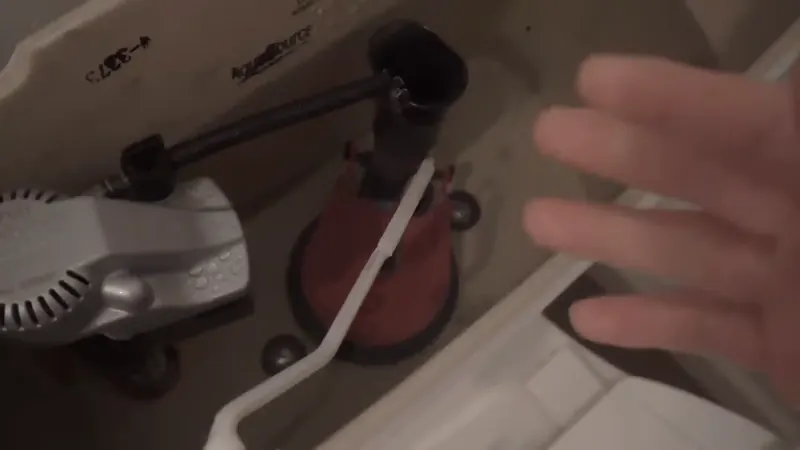
A toilet that runs, whether constantly or in periodic bursts when no one has touched it, is wasting water and money. In Commerce City, a single failing toilet can lose 200 gallons per day, which is roughly 6,000 gallons per South Adams County Water and Sanitation District billing cycle and translates to $20 to $30 per month at residential rates. The frustrating part is that the cause is usually one of three inexpensive components, and identifying which one is failing takes about 15 minutes with no special tools. The complicating factor in Commerce City is the water chemistry, which affects how these components fail and why a simple part swap sometimes does not solve the problem.
The Three Things That Make a Toilet Run
A toilet has a remarkably simple mechanism, and a running toilet always comes down to one of three failures. The first and most common is a flapper seal failure. The flapper is the rubber disc that sits over the flush valve opening at the bottom of the tank, sealing water in the tank between flushes. When you flush, the flapper lifts, the tank water rushes into the bowl, and the flapper drops back to reseal. As the flapper rubber ages and hardens, or as mineral deposits accumulate on the flush valve seat it rests against, the seal degrades. Water then migrates slowly from the tank into the bowl, the tank level drops, and the fill valve cycles on periodically to top it back up. This produces the intermittent run that turns on and off with no one touching the toilet.
The second failure is a fill valve that does not shut off completely. The fill valve refills the tank after each flush and is supposed to stop when the tank reaches its set level. A worn fill valve allows water to continue running into the tank past the fill line, where it overflows down the overflow tube into the bowl. This produces a continuous run sound rather than the intermittent cycling of a flapper failure.
The third failure, the one the post title calls "something worse," is a degraded flush valve seat. This is the plastic or metal rim that the flapper seals against. When mineral deposits build up on the seat or the seat surface becomes scored and pitted, even a brand-new flapper cannot form a tight seal against it. This is the failure that frustrates Commerce City homeowners who replace the flapper and find the toilet still running.
The 15-Minute Diagnosis
Start with the dye test, which identifies a flapper or seat failure definitively. Remove the tank lid. Add several drops of food coloring or a dye tablet to the tank water. Do not flush. Wait 15 to 20 minutes. Then look at the bowl water. If color has appeared in the bowl without flushing, water is migrating from the tank through the flapper seal, confirming a flapper or seat problem. If the bowl water stays clear, the flapper is sealing and the problem is elsewhere.
For a continuous run sound, check the fill valve. Lift the tank lid and watch the water level. If water is flowing over the top of the overflow tube, the fill valve is not shutting off and the water level is set too high or the valve is failing. Press down gently on the float arm or float cup. If the running stops, the float is set too high and can be adjusted downward. If pressing the float down does not stop the running, the fill valve seat is worn and the valve needs replacement.
To distinguish a flapper failure from a flush valve seat failure, replace the flapper first, since it is the cheaper and more common culprit, then run the dye test again. If the dye test is still positive after a new flapper, the flush valve seat is the problem, not the flapper.
Why Commerce City Water Makes This Worse
Here is where Commerce City's specific conditions enter the picture. Before the 2021 SACWSD centralized softening project, the city's water ran at roughly 21 grains per gallon hardness. That very-hard water deposited mineral scale on every surface it touched, including the flush valve seats inside toilet tanks. Over years of service, this scale accumulated on the seats faster than it would in soft-water markets.
The result is that Commerce City toilets, particularly those installed in the late 1990s and early 2000s, frequently develop compound failures. The flapper rubber hardens with age, and the flush valve seat accumulates mineral scale, and the two problems combine. A homeowner replaces the flapper, expecting that to solve the running, and discovers the toilet still runs because the scaled-up seat prevents even the new flapper from sealing. This compound failure is far more common in Commerce City than in soft-water regions, and it is a direct consequence of the pre-2021 water chemistry.
The 2021 softening project dropped hardness to about 7 grains per gallon, which slows future scale accumulation. But toilets installed before 2020 carry years of accumulated seat scale that the softer water does not remove. For these toilets, addressing the seat is often necessary alongside the flapper replacement.
Fixing the Compound Failure
When the dye test stays positive after a flapper replacement, the flush valve seat needs attention. For light scale deposits, soaking the seat with white vinegar dissolves the mineral buildup and may restore a sealing surface. Pour white vinegar into the tank, let it sit on the seat overnight, then scrub the seat gently and rinse. For heavier scale or a scored seat, this will not be enough. The options are to grind the seat smooth with a seat-repair tool or to replace the entire flush valve, which requires removing the tank from the bowl.
For older Commerce City toilets, particularly those in Original Commerce City and Adams City homes installed before 1990, all three components may be at end of service life simultaneously. The flapper is hardened, the fill valve is worn, and the flush valve seat is scaled and scored. In these cases, a complete tank rebuild kit that replaces all three components, or in some cases a full toilet replacement, is more practical than chasing each failure individually.
The SACWSD Bill Impact
It is worth understanding what a running toilet actually costs, because the number motivates prompt repair. A toilet with a failing flapper that allows continuous tank-to-bowl migration loses roughly 200 gallons per day. Over a SACWSD billing cycle, that accumulates to about 6,000 gallons. At Commerce City residential water rates, the waste runs $20 to $30 per month. If both bathrooms in a home have toilets that were renovated in the same year with the same components, both flappers tend to fail around the same time, and the combined loss doubles.
The repair, by contrast, is inexpensive. A flapper is a $5 to $15 part. A fill valve is $10 to $25. A complete tank rebuild kit is $20 to $40. Against $20 to $30 per month in waste, the repair pays for itself within the first billing cycle.
Confirming the Loss with Your SACWSD Meter
If you are not sure whether a toilet is the source of an elevated SACWSD bill, the meter test confirms active supply loss. Close every fixture in the house and watch the SACWSD potable meter flow indicator during a no-use period. Movement confirms an active leak. Then run the dye test in every toilet. A positive dye test in any toilet identifies the source. If the meter moves but all toilet dye tests are negative, the loss is elsewhere in the supply system and warrants further detection.
Most running toilets are a straightforward homeowner repair once the failing component is identified. But when a flapper replacement does not stop the running, when the flush valve seat is badly scored, or when an older toilet has multiple simultaneous failures, professional repair confirms the diagnosis and addresses the seat properly. If your Commerce City toilet keeps running after a flapper swap, or if you want to confirm a toilet is the source of a bill increase, call (303) 552-3896.
Have a Leak in Commerce City Right Now?
Commerce City leak detection around the clock. Adams County licensed, no forms.
Call 24/7: (303) 552-3896Frequently Asked Questions
How much does a running toilet cost on my Commerce City SACWSD bill?
A toilet with a failing flapper loses roughly 200 gallons per day, about 6,000 gallons per SACWSD billing cycle, costing $20 to $30 per month at residential rates. Two toilets failing simultaneously, common when both bathrooms were renovated together, doubles that. The repair parts cost $5 to $40, so the fix pays for itself within the first billing cycle.
Why does my Commerce City toilet still run after I replaced the flapper?
The most common cause is mineral scale on the flush valve seat that the new flapper rests against. Pre-2021 SACWSD water at 21 grains per gallon deposited scale on flush valve seats faster than soft water, so even a new flapper cannot seal against a scaled or scored seat. Soaking the seat with white vinegar removes light deposits; heavier scoring requires seat grinding or full flush valve replacement.
How do I tell if my running toilet is the flapper or the fill valve?
Run the dye test: add food coloring to the tank without flushing and wait 15 minutes. Color in the bowl confirms a flapper or seat failure. For the fill valve, watch the water level; if water flows over the overflow tube the fill valve is not shutting off. Pressing the float arm down to stop the running indicates the float is set too high; if pressing does not stop it, the fill valve needs replacement.
Related Services
- Toilet Leak Detection & Repair
- Toilet Tank Leak Detection & Repair
- Plumbing Leak Detection & Repair
- Residential Leak Detection & Repair
- Bathroom Leak Detection & Repair
- Non-Invasive Leak Detection
Service Areas
Commerce City Leak Detection, 24/7
Adams County licensed. Non-invasive detection. No forms.
(303) 552-3896