Warm Patch on Your Commerce City Floor in the Middle of Winter? That's Not Heat — That's a Leak
If a section of your floor is warm to the touch in the middle of a Commerce City January, and you do not have radiant floor heating, you are most likely standing over a hot-water slab leak. Here is what is happening below the concrete.
Leak Emergency? Call (303) 552-3896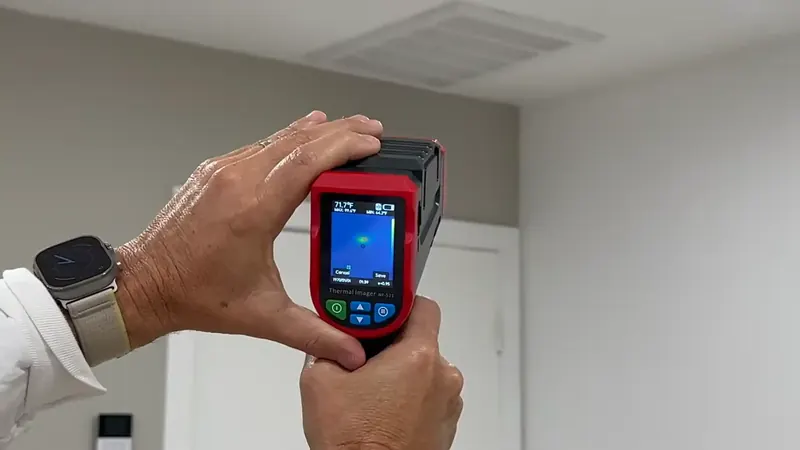
It is a strange thing to notice. You walk across your floor on a cold Commerce City winter morning, and one spot is warm. Not the whole room, just a patch, maybe a couple of feet across. If your home does not have radiant in-floor heating, there is no innocent explanation for a warm spot on a cold-weather floor. What you are almost certainly feeling is the heat from a hot-water supply line that has fractured beneath the slab, and the warm water escaping from it is heating the concrete above. This is one of the clearer warning signs of a slab leak, and Commerce City's cold winters actually make it easier to notice.
Why the Floor Gets Warm
In slab-on-grade homes, common throughout Commerce City's master-planned communities like Reunion, Belle Creek, and Buckley Ranch, the water supply lines run within or beneath the concrete slab that forms the foundation and floor. These lines carry both cold water and hot water. The hot-water lines deliver water heated to roughly 120 degrees from the water heater to the fixtures throughout the house.
When a hot-water supply line fractures beneath the slab, that 120-degree water escapes into the sub-slab base and the surrounding concrete. Concrete conducts heat reasonably well, so the warm water heats the slab from below, and the heat rises to the floor surface above the leak. The result is a warm patch on the floor, centered roughly over the fracture point, fading outward as the heat dissipates through the slab.
The reason this is so noticeable in winter is the contrast. In a Commerce City January, the rest of your slab floor is cold, chilled by the winter ground temperatures and the cold air. Against that cold background, a patch warmed by escaping hot water stands out dramatically. The same leak in summer, when the whole floor is warmer, produces far less contrast and is much easier to miss. Commerce City's cold winters, with their hard freezes at the city's 5,167-foot semi-arid elevation, make winter the season when slab leaks most often announce themselves through this warm-spot symptom.
The Other Symptoms That Accompany It
A warm floor patch rarely arrives alone. A hot-water slab leak is actively losing water, and that loss shows up in other ways. The most reliable companion symptom is an unexplained increase in the South Adams County Water and Sanitation District bill. The leak runs continuously, 24 hours a day, adding gallons to the meter that do not correspond to any household use. A slab leak losing even a modest flow can add noticeably to a SACWSD bill over a billing cycle.
Other accompanying signs include the faint sound of running water when everything in the house is turned off, audible if you put your ear near the floor or a wall in a quiet house. Some homeowners notice their water heater running more often than usual, because it is constantly reheating to replace the hot water escaping through the leak. And in some cases, there is a drop in hot-water pressure at the fixtures, as the leak diverts some of the supply.
Confirming It Is a Leak
The fastest confirmation is the SACWSD meter test. Turn off every fixture and appliance in the house. Locate the SACWSD potable meter in the curb box and watch the flow indicator. If it is moving with everything off, you have an active supply leak, which combined with the warm floor patch strongly indicates a hot-water slab leak. You can also close the main interior shutoff and confirm the meter stops, verifying the leak is inside the house rather than in the buried service line.
It is worth ruling out the innocent explanations first. If your home has radiant in-floor heating, a warm floor is expected and normal. If the warm spot is near a heating duct in the slab, that could explain localized warmth. But for a typical Commerce City slab-on-grade home without in-floor heat, a warm patch that does not correspond to any heating element, combined with meter movement, points clearly to a hot-water slab leak.
Why Slab Leaks Happen in Commerce City
Two factors drive slab leaks in Commerce City. The first is the soil. Adams County sits on expansive bentonite clay, which swells when it absorbs moisture and shrinks when it dries. In Commerce City's climate, the clay goes through this cycle seasonally: swelling when the South Platte alluvial zone wets out in spring, shrinking through the semi-arid summers. Each cycle of swelling and shrinking applies mechanical stress to the supply lines embedded in the slab, particularly at fittings and anchor points where the pipe cannot flex freely. Over time, this repeated stress can fracture the pipe.
The second factor, for copper supply lines, is corrosion. The pre-2021 SACWSD water at 21 grains per gallon accelerated interior pitting corrosion in copper pipe, and slab-embedded copper is subject to the same pinhole failures as in-wall copper. For homes with copper supply in the slab, a slab leak may be a corrosion-driven pinhole as much as a clay-stress fracture. For the newer master-planned communities with PEX supply, the failures concentrate at fittings stressed by the clay movement.
How the Leak Is Located
Finding the exact fracture point beneath a slab without breaking up the entire floor is the central challenge of slab leak repair, and it is solved with non-invasive detection. The process starts with pressure testing to confirm which supply circuit, hot or cold, is losing pressure. Since a warm floor indicates a hot-water leak, the hot-water circuit is the focus.
Thermal imaging is especially effective here, and Commerce City's winter conditions make it more so. The thermal camera scans the slab surface and maps the warm zone created by the escaping hot water. Against the cold winter slab, the warm zone is sharply defined, narrowing the search to a specific area. Acoustic listening then works within that zone, detecting the sound of the pressurized leak and pinpointing the fracture to within 12 to 18 inches. For PEX supply, where acoustic signals attenuate, tracer gas locates the fracture through the slab. The combination of methods confirms the exact location before any concrete is opened.
The Repair Options
Once the fracture is pinpointed, there are several repair paths. A spot repair involves a single small core drill, typically about 4 inches, directly over the confirmed leak, cutting out the failed section and installing a coupling, then patching the concrete. This works well for an isolated fitting failure in a newer Reunion or Belle Creek home where the rest of the circuit is sound.
For older homes, or where the slab-embedded pipe is broadly at risk, rerouting runs a new supply line above the slab through the walls and ceiling, bypassing the failed section entirely and avoiding the need to cut the slab along the old pipe route. This is often the better choice when the pipe in the slab is aging copper that is likely to develop additional leaks. The right approach depends on the pipe material, the home's age, and the condition of the surrounding pipe, which is assessed as part of the detection process.
A warm floor patch in a Commerce City winter is a symptom worth taking seriously and acting on promptly, because a hot-water slab leak loses water continuously and the clay-soil and corrosion factors that cause it tend to produce additional failures over time. If you have felt a warm spot on your floor that you cannot explain, run the meter test, and if it confirms a leak, call (303) 552-3896 to have the slab leak located and assessed before any concrete is opened.
Have a Leak in Commerce City Right Now?
Non-invasive detection that finds the source fast. Adams County response, day or night.
Call 24/7: (303) 552-3896Frequently Asked Questions
Does a warm spot on my Commerce City floor always mean a slab leak?
Not always, but for a slab-on-grade home without radiant in-floor heating, a warm patch that does not correspond to a heating element strongly suggests a hot-water slab leak. Confirm with the SACWSD meter test: if the meter moves with everything off, you have an active supply leak. Combined with the warm patch, that points clearly to a hot-water line fracture beneath the slab.
Why are slab leaks common in Commerce City homes?
Two factors. Adams County expansive bentonite clay swells and shrinks seasonally, stressing slab-embedded supply lines at fittings and anchor points. And for copper supply, the pre-2021 SACWSD water at 21 grains per gallon drove interior pitting corrosion. Master-planned communities with PEX supply fail mostly at clay-stressed fittings; older copper-supply homes can fail from either corrosion or clay stress.
How is a slab leak found without breaking up my whole Commerce City floor?
Pressure testing confirms which circuit is leaking, then thermal imaging maps the warm zone, which is especially sharp against Commerce City's cold winter slab. Acoustic listening or tracer gas then pinpoints the fracture to within a few inches. A targeted 4-inch core drill at the confirmed location follows, rather than breaking up the floor to search.
Related Services
- Slab Leak Detection & Repair
- Thermal Imaging Leak Detection
- Acoustic Leak Detection
- Foundation Leak Detection & Repair
- Non-Invasive Leak Detection
- Pinpoint Leak Detection
Service Areas
Commerce City Leak Detection, 24/7
Adams County licensed. Non-invasive detection. No forms.
(303) 552-3896