Wall Leak Behind Drywall in Commerce City: How Pros Locate It Without Tearing Up Half Your Home
The instinct with a wall leak is to start cutting drywall to find it. Professionals do the opposite, locating the leak precisely from the surface first, so the only opening is a small targeted cut at the exact spot.
Leak Emergency? Call (303) 552-3896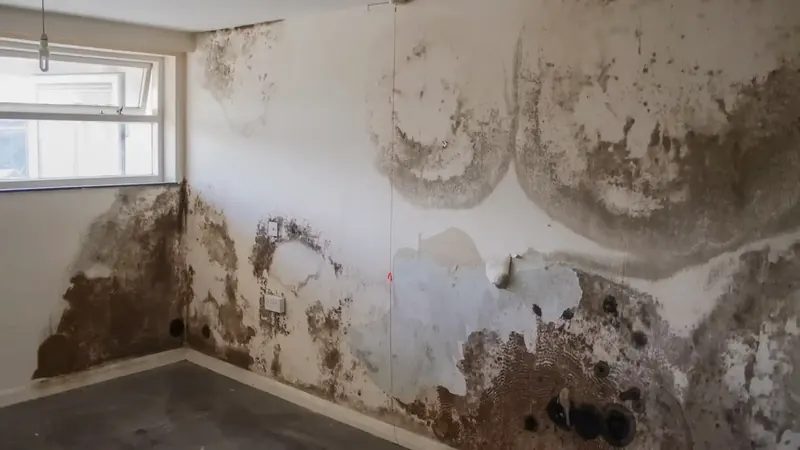
When a Commerce City homeowner discovers signs of a leak inside a wall, a damp patch, a stain, soft drywall, or the musty smell of hidden moisture, the natural instinct is to start cutting into the drywall to find the source. This instinct is understandable but costly, because cutting blindly often means opening large sections of wall in the wrong places before finding the leak, leaving extensive damage to repair. Professionals take the opposite approach: they locate the leak precisely from the surface first, using detection equipment that sees and hears through the wall. So that the only opening needed is a small, targeted cut at the exact location of the failure. Here is how that works.
Why Cutting Blindly Goes Wrong
The problem with cutting drywall to find a leak is that the visible symptom rarely marks the actual leak location. Water inside a wall cavity does not stay put. It runs down the framing, travels along horizontal members, wicks through insulation, and pools at low points before saturating through to where you see the stain. The wet spot on the drywall surface might be a foot or more from the pipe that is actually leaking.
So when a homeowner cuts open the wall at the stain, they often find the exit point where water surfaced, not the source. They cut again, following the moisture, and again, opening progressively more wall until they finally reach the leak. Each opening must eventually be patched, taped, textured, and painted. In a Commerce City home, especially an older one in Original Commerce City or Adams City with original plaster walls that are difficult to match, this trail of exploratory openings can become more expensive to repair than the leak itself. The blind-cutting approach trades a precise problem for a widespread mess.
How Thermal Imaging Sees the Moisture
The first professional tool is thermal imaging. A thermal camera detects the infrared radiation that surfaces emit and translates temperature differences into a visible image. Moisture inside a wall changes the wall surface temperature: a hot-water leak warms the surface above it, while a cold-water leak or evaporating moisture cools the surface slightly. The thermal camera reveals these temperature anomalies, mapping the moisture inside the wall without any cutting.
This is especially effective in Commerce City because of the climate. In winter, the temperature contrast between a leak-affected area and the surrounding wall is large, making the moisture anomaly stand out sharply on the thermal image. The camera shows not just a single point but the extent and shape of the moisture, often revealing a pattern that traces back toward the source. Thermal imaging narrows the search from the whole wall to a specific zone in minutes, without a single cut.
How Moisture Meters Confirm the Extent
Thermal imaging identifies the suspect zone; moisture meters confirm and refine it. A moisture meter pressed against the drywall surface reads the moisture content of the wall material at that point, without penetrating it. By taking systematic readings across the thermally-identified zone, a technician maps exactly how far the moisture extends and identifies the wettest point, which is typically closest to the actual leak.
This mapping serves two purposes. It pinpoints where to open the wall, narrowing from the thermal zone to a specific spot. And it defines the full extent of the wet area, which matters for the repair, because the access cut needs to expose enough of the wet zone to allow proper drying and to address any moisture-damaged material. The moisture meter turns the thermal camera's general zone into a precise target.
How Acoustic Detection Pinpoints Active Leaks
For an active, pressurized leak, acoustic detection adds another layer of precision. A pressurized supply line leaking inside a wall produces sound, the hiss of water escaping under pressure. Electronic acoustic equipment, with a sensitive contact probe pressed against the wall surface, detects this sound and locates its source. As the probe moves closer to the leak, the signal grows stronger, pinpointing the failure.
This is particularly valuable for the pinhole leaks common in Commerce City's copper-supply homes. A pinhole losing a small flow produces a faint acoustic signal that electronic amplification can detect and locate to within 12 to 18 inches. Combined with the thermal and moisture mapping, acoustic detection provides a second independent confirmation of the leak location. When two different methods, one detecting moisture and one detecting sound, agree on the same spot, the confidence is high enough to open the wall at that exact point.
The Result: One Small Targeted Cut
The payoff of this layered detection approach is that the wall opening is a single, small, targeted cut, typically about 6 by 8 inches, at the confirmed leak location, rather than a series of exploratory openings across the wall. The leak is exposed, repaired, the cavity is dried, and the one small opening is patched. The difference in repair scope is dramatic: one neat patch versus a wall scarred by exploratory cuts.
For Commerce City homes, this precision matters most in the older neighborhoods where wall finishes are hard to replicate. Original plaster-over-lath walls in Original Commerce City, Adams City, and Irondale homes cannot be patched as easily as modern drywall, and matching a 70-year-old plaster finish is a skilled job. Minimizing the number and size of openings in these walls preserves the original finish and limits the restoration work. Even in newer drywall homes, a single targeted cut is far less disruptive and costly to repair than exploratory demolition.
What the Detection Reveals About the Bigger Picture
Locating a wall leak precisely also provides information about the broader plumbing condition. In Commerce City's copper-supply tract homes, a pinhole leak in one wall is often a sign that the copper throughout the house is at the same corrosion stage, since it was all installed at the same time and received the same pre-2021 SACWSD water at 21 grains per gallon. The detection visit that locates the one leak can also assess whether the broader supply system is approaching the failure stage, which informs whether a spot repair or a more comprehensive solution like a repipe is the wiser long-term choice.
This is the difference between treating a symptom and understanding the system. Locating and repairing the one wall leak resolves the immediate problem. Understanding what that leak indicates about the rest of the plumbing helps the homeowner make informed decisions about the future, rather than discovering the pattern one wall leak at a time.
The Professional Approach in Summary
The professional approach to a wall leak inverts the homeowner instinct. Instead of cutting to find the leak, professionals find the leak precisely from the surface, then cut once at the exact spot. Thermal imaging maps the moisture, moisture meters confirm the extent and pinpoint the wettest point, and acoustic detection locates active pressurized leaks, all without opening the wall. The result is a single small targeted opening rather than exploratory damage, which matters especially in Commerce City's older homes with irreplaceable plaster finishes. If you have signs of a leak inside a wall and want it located precisely without tearing up your home, call (303) 552-3896.
Have a Leak in Commerce City Right Now?
Find the leak before the damage spreads. Commerce City and Adams County response, any hour.
Call 24/7: (303) 552-3896Frequently Asked Questions
How do professionals find a wall leak in Commerce City without cutting the drywall?
They locate the leak from the surface first using detection equipment. Thermal imaging maps the moisture inside the wall by temperature difference, moisture meters confirm the extent and pinpoint the wettest point, and acoustic detection locates active pressurized leaks by sound. Only after the leak is precisely located is the wall opened, with a single small targeted cut at the exact spot rather than exploratory openings.
Why shouldn't I just cut the drywall at the stain to find the leak in my Commerce City home?
Because the stain rarely marks the actual leak. Water runs along framing and pools at low points before surfacing, so the visible spot is often a foot or more from the source. Cutting at the stain usually finds the exit point, not the leak, leading to repeated openings as you follow the moisture. Each opening must be patched, which in older Commerce City homes with plaster walls can cost more than the leak repair itself.
Does locating a wall leak tell me anything about the rest of my Commerce City plumbing?
Yes. In Commerce City's copper-supply tract homes, a pinhole leak in one wall often indicates the copper throughout the house is at the same corrosion stage, since it was installed together and received the same pre-2021 hard water. The detection visit can assess whether the broader supply system is approaching failure, helping you decide between a spot repair and a more comprehensive solution like a repipe.
Related Services
- Wall Leak Detection & Repair
- Thermal Imaging Leak Detection
- Non-Invasive Leak Detection
- Pinpoint Leak Detection
- Electronic Leak Detection
- Pinhole Leak Detection & Repair
Service Areas
Commerce City Leak Detection, 24/7
Adams County licensed. Non-invasive detection. No forms.
(303) 552-3896