Pinhole Leaks Behind Commerce City Walls: Causes, Costs, and the Repair That Actually Lasts
A pinhole leak behind a wall can do weeks of hidden damage before you see a stain. Here is what causes them in Commerce City, what the repair really costs, and why a spot patch sometimes is not the answer.
Leak Emergency? Call (303) 552-3896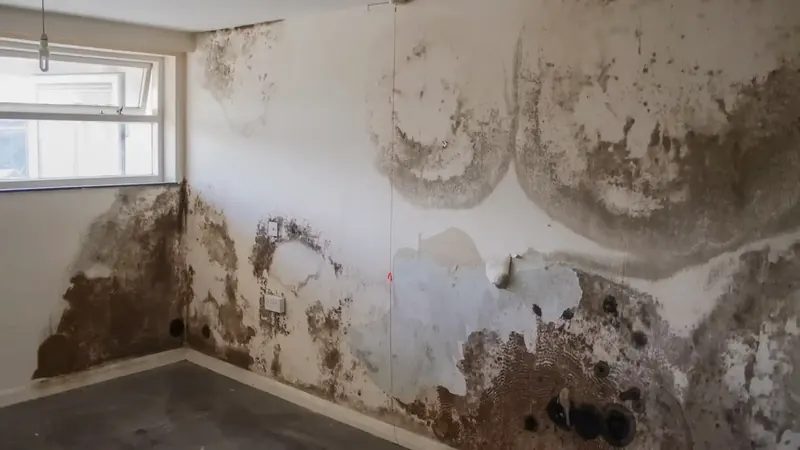
A pinhole leak behind a Commerce City wall is one of the more deceptive plumbing failures a homeowner can face. The leak itself is tiny, a perforation 1 to 3 millimeters across in a copper supply pipe, losing water at just 0.1 to 0.3 gallons per hour. But that slow, hidden flow does its damage out of sight, inside the wall cavity, for weeks before any visible symptom reaches the surface. By the time a stain appears on the drywall, the framing behind it may have been damp long enough for mold to take hold. Understanding what causes these leaks, what the real costs are, and which repair approach actually lasts is essential for Commerce City homeowners with older copper-supply homes.
What Causes Pinhole Leaks in Commerce City Walls
The root cause is interior pitting corrosion in copper pipe, driven by Commerce City's water chemistry over time. Before the 2021 South Adams County Water and Sanitation District centralized softening project, the city's water ran at roughly 21 grains per gallon hardness, in the very-hard range. That water spent decades in contact with the type-M copper supply lines installed in homes from the 1960s through the early 2000s.
Copper corrodes through pitting, the formation of small localized points where the protective oxide layer fails and the underlying copper is attacked by dissolved oxygen in the water. In hard water, mineral scale accumulates around each developing pit, concentrating the corrosive chemistry at the pit base and accelerating its progress through the pipe wall. The pit drills steadily toward the outside of the pipe, and when it finally perforates, water under supply pressure begins to escape. This is the pinhole leak.
The in-wall supply branches in Commerce City's tract homes, particularly in neighborhoods like Fairfax, Rose Hill, and North Beach, are exactly where these failures concentrate. The copper that runs through these walls received the same 21-gpg water for the same decades, and it is reaching the failure point across the housing stock now.
The Hidden Damage Timeline
This is the part that makes pinhole leaks costly. A pinhole losing 0.1 to 0.3 gallons per hour does not produce a dramatic gush. It produces a slow weep that the wall cavity absorbs. Consider the typical timeline: the pinhole opens, and water begins seeping into the wall cavity. For the first week or two, the moisture is absorbed by the drywall back, the insulation, and the framing, with no visible exterior sign. The wood framing nearest the pipe begins to absorb moisture, and over several weeks reaches 20 percent or higher moisture content, which is above the threshold where mold begins to grow.
Around the six-to-eight-week mark, the moisture finally saturates through to the visible drywall face, and a stain appears, often small at first, the size of a playing card. The homeowner notices it, perhaps paints over it, and the stain returns because the source is still active. By the time the leak is taken seriously and investigated, the framing behind the wall may have eight or more weeks of moisture exposure, with mold establishment and potential wood degradation already underway.
This timeline is why the fitting repair itself is often the smallest part of the total cost. The pinhole repair might take 40 minutes. The drywall remediation, the framing treatment, and in some cases the mold remediation can take days. The lesson is that early detection, before the stain appears, dramatically reduces the total cost.
Detecting the Leak Before the Wall Is Damaged
The earliest indicator of a pinhole leak is SACWSD meter movement during a no-use period. Close every fixture and appliance, locate the SACWSD potable meter in the curb box, and watch the flow indicator. Any movement confirms an active leak, often weeks before any wall stain would appear. For Commerce City homeowners with older copper supply, periodic meter testing is the single most effective practice for catching pinhole leaks early.
Once an active leak is confirmed, electronic leak detection locates the specific failure behind the wall without exploratory demolition. Because pinhole leaks have such low flow rates, standard acoustic equipment often cannot detect them, so electronic amplification is used. This equipment boosts the faint acoustic signal of the pressurized pinhole and applies digital filtering to isolate the leak's frequency from background noise. Electronic correlation then pinpoints the failure to within 12 to 18 inches. Thermal imaging confirms the extent of the wet zone, ensuring the access cut covers the affected area for proper drying.
The Spot Repair and Why It Sometimes Is Not Enough
Once the pinhole is located, the immediate repair is straightforward. A small access cut, typically 6 by 8 inches, is opened at the confirmed location. The failed pipe section is cut out a few inches on each side of the perforation, and a coupling, either compression or soldered, bridges the gap with new copper. The cavity is dried, and the access cut is patched. For a single isolated failure in otherwise sound pipe, this spot repair is the correct and complete solution.
But here is where Commerce City homeowners need to think carefully. The spot repair fixes the specific pipe that failed. It does nothing for the rest of the copper on the same circuit, which is at the same corrosion stage. That adjacent copper was installed the same year, received the same 21-gpg water for the same decades, and has the same accumulated pit damage. The pipe that failed first failed because it was marginally ahead in the corrosion process, but the rest is not far behind.
This is why a pinhole spot repair on aging copper is frequently followed by another pinhole on the same circuit within 6 to 18 months, and another after that. Each repair means another access cut, another wall opening, another patch, and another disruption. The spot repair is not wrong, but on a circuit that is broadly at the failure point, it can become the first in a series.
The Repair That Actually Lasts
The repair that actually lasts, for a copper supply system that has reached the pinhole failure stage, is a whole-house repipe with PEX. This replaces all the supply distribution lines from the main shutoff to the fixtures, eliminating the aging copper entirely and ending the serial-failure cycle. PEX cross-linked polyethylene handles Commerce City's post-2021 water at 7 grains per gallon without the mineral deposit accumulation that corroded the copper, and its flexibility absorbs the Adams County clay soil movement that stresses rigid pipe.
The decision between spot repair and repipe hinges on a supply survey conducted after the first pinhole. The survey assesses how many circuits show corrosion indicators consistent with imminent failure. For a Commerce City home with original copper built before 1980, the survey usually reveals that more than one circuit is at risk. When that is the case, a single whole-house repipe is more economical than the sequence of spot repairs that would otherwise unfold over the following years, and it resolves the problem permanently rather than chasing it from wall to wall.
What It Costs
A single pinhole spot repair on accessible copper typically completes in 1 to 2 hours of labor, plus the drywall patching and any remediation if the leak was active long enough to cause framing damage. A whole-house repipe for a standard 3-bedroom, 2-bathroom Commerce City home typically takes 1 to 2 days for the pipe installation and 1 to 2 days for drywall restoration. The repipe is a larger upfront investment than a single spot repair, but for a system at the serial-failure stage, it is frequently less than the cumulative cost of multiple spot repairs plus the repeated disruption and the risk of hidden damage from each new leak.
For Commerce City homeowners facing a pinhole leak behind a wall, the practical approach is: detect it early through meter testing before the wall is damaged, locate it precisely with electronic detection, and make the repair-versus-repipe decision based on a supply survey rather than discovering the pattern one leak at a time. If you have a wall stain, a confirmed pinhole, or a copper system you want assessed, call (303) 552-3896.
Have a Leak in Commerce City Right Now?
Commerce City leak detection around the clock. Adams County licensed, no forms.
Call 24/7: (303) 552-3896Frequently Asked Questions
How long does a pinhole leak damage a Commerce City wall before I see it?
A pinhole leak losing 0.1 to 0.3 gallons per hour typically takes 6 to 8 weeks to saturate through to a visible drywall stain. During that time, the framing behind the wall absorbs moisture and can exceed 20 percent moisture content, above the mold-growth threshold. This is why the fitting repair is often the smallest cost; the remediation of hidden framing damage is the larger expense, and early detection minimizes it.
Should I spot-repair or repipe after a pinhole leak in my Commerce City home?
A single isolated failure in otherwise sound pipe warrants spot repair. But if a supply survey shows multiple circuits at the same corrosion stage, which is common for Commerce City copper homes built before 1980, whole-house repipe with PEX is more economical than the sequence of spot repairs that would otherwise occur. A second pinhole within 18 months strongly indicates repipe is the lasting solution.
Can a pinhole leak behind a Commerce City wall be found without tearing it open?
Yes. SACWSD meter testing confirms the active leak, often before any stain appears. Electronic amplification then locates the failure behind the wall to within 12 to 18 inches without exploratory demolition, and thermal imaging maps the wet zone. The access cut is then a targeted 6-by-8-inch opening at the confirmed location rather than section-wide exploratory cutting.
Related Services
- Wall Leak Detection & Repair
- Pinhole Leak Detection & Repair
- Thermal Imaging Leak Detection
- Copper Pipe Leak Detection & Repair
- Non-Invasive Leak Detection
- Whole-House Repipe Service
Service Areas
Commerce City Leak Detection, 24/7
Adams County licensed. Non-invasive detection. No forms.
(303) 552-3896